Latest Trends in Google Map Pack Rankings in 2025
The Google Map Pack hasn’t lost an ounce of influence—it’s more dominant than ever. When someone searches for a service in their city, those three map listings sit above the fold, drawing the first clicks and often the only calls. So, understanding the latest trends in Google Map Pack ranking has become more important than ever.
For local businesses, winning a spot here isn’t just nice visibility—it’s the difference between steady leads and silence.
What makes the challenge tougher is that Google isn’t standing still. Its algorithm has been quietly reshaping how Map Pack results are served: smarter proximity signals, stronger emphasis on real customer interactions, and deeper use of entity authority. So, the criteria that worked a year ago may now only get you halfway up the pack.
This comprehensive guide cuts through the noise. No vague theories, no outdated tactics. You’ll see the latest trends shaping Map Pack rankings and the specific levers you can pull right now to get ahead of competitors.
Why the Google Map Pack Matters More Than Ever
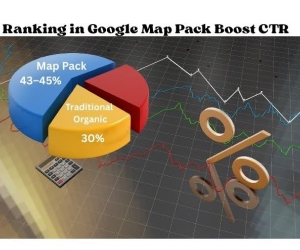 Studies show the Map Pack captures 43–45% of all local search clicks, while traditional organic listings get under 30%.
The Map Pack is no longer just a nice-to-have placement—it’s the frontline of local search visibility. Organic results haven’t disappeared, but they command less attention, especially on mobile. For service-based businesses, showing up in the three-pack can mean the difference between steady phone calls and no calls at all.
The Visibility Shift
- Local-intent searches (“dentist near me,” “best plumber in Dallas”) almost always trigger the Map Pack.
- On mobile, the three-pack takes up the majority of the screen before any organic results appear.
- Fewer users are scrolling down—clicks are concentrated in the top three listings.
User Behavior Driving Map Pack Clicks
- Reviews and ratings act as instant trust signals. A 4.8-star average with 200 reviews will win the click over a 3.2-star business every time.
- Proximity still matters, but Google is weighing it more smartly—balancing relevance and authority against distance.
- Mobile convenience is important. Users want a one-tap call, directions, or website visit without hunting through multiple pages.
Business Implications
- Visibility in the Map Pack leads directly to phone calls, direction requests, and booked appointments.
- Being outside the three-pack often means being invisible, no matter how well your website ranks organically.
- For local service providers, Map Pack dominance translates into higher lead volume at lower acquisition cost.
4 Latest Trends in Map Pack Ranking Factors (2025 Update)
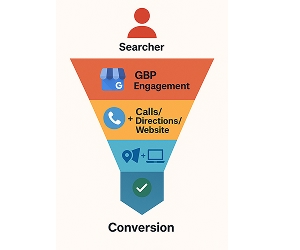 Businesses that used to win with citations and a few reviews are now finding themselves outranked by competitors who build trust and engagement across multiple signals.
Here’s what’s driving the Map Pack in 2025:
1: Proximity Signals Getting Smarter
Proximity is still a ranking factor, but it’s no longer a blunt instrument. Google has refined how it weighs “near me” intent. Google confirmed location relevance remains central to ranking, but systems now blend proximity with broader intent.
- Dynamic weighting: The algorithm considers both the searcher’s location and the business’s actual location. For example, a user in downtown Chicago searching for “injury lawyer” may see firms slightly outside their immediate radius if those firms show stronger authority.
- Balanced intent: Instead of blindly rewarding the closest option, Google blends distance with relevance, reviews, and engagement. This prevents low-quality businesses from ranking just because they’re physically nearby.
2: Authority Beyond Links — Local Entity Strength
Google’s understanding of business authority goes deeper than backlinks. It’s evaluating the business as a local “entity” with signals across the web.
- Cross-platform authority: Strong, consistent presence across GBP, major directories, press mentions, and industry platforms.
- Topical authority: Businesses with detailed, optimized profiles (services, categories, attributes) outperform bare-bones listings.
- Consistency in NAP: Name, address, and phone data must be identical across every mention. Even small mismatches chip away at entity trust.
3: Reviews as Weighted Quality Signals
Reviews have always mattered, but 2025 is about how they’re earned and maintained.
- Quality over quantity: A smaller volume of detailed, authentic reviews can outweigh hundreds of generic five-stars.
- Sentiment analysis: Google parses language inside reviews to evaluate tone and context, not just star ratings.
- Review velocity: A steady stream of new reviews signals active customer engagement, while long gaps can weaken trust.
4: On-Profile Engagement Metrics
Google is watching how users interact with your profile and using those signals as real-time ranking factors.
- Click-to-call rates: Frequent calls through GBP show relevance and usefulness.
- Direction requests: A high volume signals local popularity and intent to visit.
- Photo views & interactions: Fresh, authentic photos that generate user views and clicks strengthen your profile’s weight.
Latest Local SEO Practices Driving Map Pack Rankings
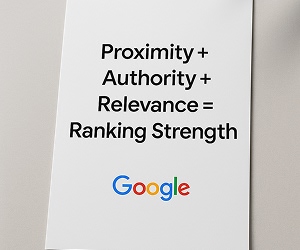 Winning a spot in the Map Pack isn’t about checking a few boxes anymore. Businesses that rise to the top are the ones layering advanced tactics on top of the basics.
Google itself highlights that engagement is a ranking signal—clicks, directions, and photo interactions are used as “real-world proof of relevance”.
The following are the practices that matter most in 2025:
Optimizing Google Business Profile Beyond Basics
Your GBP is no longer just a name, address, and phone number. Google is rewarding businesses that treat their profile like a living storefront.
- Attributes & categories: Add relevant attributes (e.g., “wheelchair accessible,” “24/7 service”) and explore secondary categories that capture niche search intent.
- Service areas: Define clear service zones for multi-city coverage instead of leaving them vague.
- Frequent updates: Post new photos, answer questions, and add time-sensitive offers. Stale profiles get less visibility because Google sees them as inactive.
While citations don’t carry the weight they once did, they still reinforce trust in certain industries. Marketers continue to stress their role in Map Pack visibility.
Boost Your Local Biz with Map Pack Ranking! 🌐
Attention entrepreneurs & agency owners! Uncover the power of citations for local success. Quality trumps quantity – 60 citations in small towns, 200 in big cities.#LocalSEO #CitationsStrategy pic.twitter.com/KNWE673atI— DigitalBullGO – Leadgen AI (@digitalbull_go) September 6, 2023
— @digitalbull_go
This isn’t about citation volume anymore — it’s about accuracy, consistency, and relevance in the places Google checks.
Content That Triggers Local Visibility
Content still drives discovery, but it must be hyper-relevant to location and intent.
- Geo-targeted landing pages: Well-structured pages for each city or neighborhood you serve, not cookie-cutter duplicates.
- GBP posts: Use them strategically—align posts with searcher intent (“emergency AC repair,” “best brunch in Austin”) instead of generic updates.
- Structured data: Schema markup like LocalBusiness, FAQ, and Service helps Google interpret your content and connect it to local intent.
Behavioral and Mobile Signals
Google is reading user behavior as proof of relevance. How people interact with your site and profile directly impacts ranking strength.
- Bounce rate & dwell time: If visitors quickly leave your site, Google assumes you didn’t match intent. Pages that keep users engaged send positive signals.
- Voice search optimization: Queries phrased as questions (“Who’s the best family lawyer near me?”) are rising. Businesses optimized for conversational queries capture this traffic.
- “Near me” phrasing: Including localized keywords in titles, headings, and FAQs naturally helps Google map your relevance to these queries
Read Also: Optimize Google Business Profile
What’s New in Competitor Landscape in Map Pack Ranking
The Map Pack isn’t just evolving in how it ranks businesses—it’s also reshaping the competitive field. Who shows up against you, and why, looks different now compared to even a year ago.
AI-Driven Competitor Discovery
- New AI-powered tools now surface direct Map Pack competitors by geo-grid, service type, and search intent.
- Instead of guessing who you’re up against, businesses can see who dominates each grid point and which signals are pushing them up.
- This data-driven visibility lets you reverse-engineer strategies: review velocity, content strength, or GBP activity.
Industries Where Proximity Matters Less
Not every sector lives or dies on being the closest option.
- Legal services: Authority and reputation carry more weight than raw distance. A law firm two miles farther can still outrank a closer competitor if it has stronger reviews and content.
- Healthcare: Trust and expertise override proximity. Patients are willing to travel for quality care, and Google reflects this in its rankings.
- Specialized services: High-ticket or expertise-driven categories (e.g., plastic surgery, financial advisors) lean more on entity authority than neighborhood proximity.
Niche Categories Where Citations Still Rule
In some industries, citations remain a core differentiator.
- Restaurants and hospitality: Consistency across Yelp, TripAdvisor, and industry directories still feeds Google’s trust.
- Home services: Trades like plumbing or roofing benefit from a strong directory presence because Google cross-checks legitimacy.
- Local retail: Smaller shops in competitive niches can still gain an edge through accurate, widespread citation coverage.
Actionable Strategies to Adapt in Local SEO in 2025
The trends are clear, but the real advantage comes from applying them. These strategies give you the leverage to climb and defend your Map Pack position in 2025.
Focus on Review Management as a Ranking Lever
Reviews are no longer background noise—they’re active ranking signals. Google looks at both what’s written and how businesses engage.
- Generate reviews ethically: Ask every happy customer, but avoid shortcuts like bulk solicitation or fake reviews. A steady flow of authentic reviews carries more weight than a flood that appears overnight.
- Personalize your responses: Don’t copy-paste. Acknowledge details from the review, address concerns directly, and sign off like a human. Google interprets response quality as a sign of brand care.
- Balance review types: Aim for diversity—service-specific mentions, location references, and keyword-rich phrases often occur naturally when customers describe their experience.
Invest in Local Authority Signals
Map Pack rankings don’t happen in isolation. Google evaluates your broader entity authority in the community.
- Local press mentions: Coverage in local media or industry blogs builds digital credibility.
- Community sponsorships: Supporting events, charities, or sports teams earns citations and backlinks that tie your brand to the area.
- Backlink quality over quantity: A handful of strong, hyper-relevant local links outweigh hundreds of weak ones.
Data-Driven Optimization
Gut feeling isn’t enough anymore. You need local data that reveals where you rank—and where you don’t.
- Heatmaps & geo-grid tracking: Tools that show your rank by neighborhood block, not just city-level averages. This highlights hidden weaknesses competitors are exploiting.
- Ranking gap analysis: Identify the zones where you consistently drop out of the Map Pack and adjust strategy—whether that’s content, reviews, or citation strengthening.
- Iterative adjustments: Treat optimization as ongoing, not one-and-done. Rankings shift weekly as Google recalibrates signals.
Common Misconceptions About Map Pack Rankings
Even seasoned business owners and marketers fall into traps when it comes to local rankings. The Map Pack is surrounded by half-truths and outdated advice—here are the most common myths you can safely ignore in 2025:
Myth 1: Just Citations Are Enough
Citations matter, but they’re no longer the magic bullet. Having your name, address, and phone number listed across dozens of directories won’t secure you a top-three spot. Google now prioritizes entity strength, reviews, and engagement signals far more heavily. Citations support legitimacy, but they can’t carry rankings on their own.
Myth 2: Paying for Ads Boosts Organic Map Rank
Running Google Ads may give you more visibility in sponsored slots, but it has no direct impact on your organic Map Pack ranking. Ads and organic are separate systems. If you want to move up in the Map Pack, you need to focus on reviews, relevance, and authority, not your ad budget.
Myth 3: Set Up Once and Forget
A one-time setup of your Google Business Profile won’t keep you competitive. Profiles that sit untouched lose ground because Google favors active, frequently updated listings. Businesses posting fresh photos, responding to reviews, and updating services steadily outrank those that remain stagnant.
Read Also: Google Business Profile New Features
Summary:
Why the Google Map Pack Matters More Than Ever
- Visibility shift: fewer organic clicks, more map-based discovery
- User behavior: trust signals in reviews, proximity, and mobile use
- Business implication: direct leads from map results
4 Latest Trends in Map Pack Ranking Factors (2025 Update)
- Proximity Signals Getting Smarter: Dynamic weighting of searcher vs. business location
- Authority Beyond Links — Local Entity Strength: Cross-platform authority and NAP consistency
- Reviews as Weighted Quality Signals: Quality, sentiment analysis, and review velocity
- On-Profile Engagement Metrics: Click-to-call, directions, photo views as ranking signals
Latest Local SEO Practices Driving Map Pack Rankings
- Optimizing Google Business Profile Beyond Basics: Attributes, service areas, secondary categories, frequent updates
- Content That Triggers Local Visibility: Geo-targeted landing pages, GBP posts, structured data
- Behavioral and Mobile Signals: Bounce rate, dwell time, voice search, “near me” queries
What’s New in Competitor Landscape in Map Pack Ranking
- AI-Driven Competitor Discovery Tools: Grid-based and intent-based tracking
- Industries Where Proximity Matters Less: Legal, healthcare, and high-trust services
- Niche Categories Where Citations Are Still King: Restaurants, hospitality, trades, local retail
Actionable Strategies to Adapt in Local SEO in 2025
- Focus on Review Management as a Ranking Lever: Ethical review generation and personalized responses
- Invest in Local Authority Signals: Local press, sponsorships, and authoritative backlinks
- Data-Driven Optimization: Geo-grid tracking, ranking gap analysis, and iterative updates
Common Misconceptions About Map Pack Rankings
- “Just citations are enough” myth
- “Paying for ads boosts organic map rank”
- “Set up once and forget”
FAQs
How often do Google Map Pack ranking factors change?
Google doesn’t announce exact timelines, but local ranking factors are refined continuously. Core shifts (like the Vicinity Update) roll out every year or two, while micro-adjustments happen weekly. That means your ranking can change even if you haven’t updated anything—making consistent optimization critical.
What’s the most important factor for ranking in the Map Pack today?
There’s no single “most important” factor, but proximity, relevance, and prominence remain the core triad. In 2025, Google weighs review quality and engagement signals more heavily than raw citation counts. Businesses that combine authority (reviews, entity trust) with activity (profile updates, user engagement) tend to dominate.
Do paid Google Ads affect Map Pack rankings?
No. Running ads in Google does not influence your organic Map Pack ranking. Ads may increase overall visibility, but the Map Pack is powered by organic local signals like reviews, relevance, and authority. Paid and organic systems are completely separate in Google’s algorithm.
How can small businesses compete against big brands in Map Pack results?
Small businesses can outperform larger chains by focusing on hyper-local signals:
- Generating authentic, steady reviews.
- Optimizing service areas and categories.
- Building local backlinks and community mentions.
- Maintaining consistent engagement on their Google Business Profile.
Are keywords in business names still a ranking factor?
Yes, but with caveats. Keywords in a business name can influence relevance, but Google actively penalizes keyword stuffing or fake names. If your legal business name naturally includes a keyword (e.g., “Dallas Injury Law”), it can help. If it’s manipulated, it risks suspension.
Does posting regularly on Google Business Profile improve rankings?
Indirectly, yes. Posting on GBP doesn’t guarantee higher rankings, but it signals activity and freshness, which feed into engagement metrics. Regular posts also increase visibility in branded and discovery searches, improving click-through rates—factors that correlate with stronger Map Pack performance.
How long does it take to see results in the Google Map Pack?
Most businesses see movement within 4–12 weeks if they actively optimize reviews, content, and profile signals. Competitive industries or multi-location brands may take longer, but steady progress is common when updates are consistent.
Do backlinks still matter for Map Pack rankings?
Yes, but not in the same way as traditional SEO. Google evaluates local authority backlinks—press mentions, chamber of commerce listings, sponsorships, and community sites. These reinforce trust and entity strength, which improve Map Pack visibility.
How important are photos and videos on Google Business Profile?
Businesses with regular, high-quality photos and videos get significantly more clicks and calls. Visuals improve engagement metrics (photo views, clicks), which Google interprets as relevance and user trust—directly feeding into ranking strength.
Can duplicate or inconsistent listings hurt Map Pack performance?
Absolutely. Duplicate or mismatched business information (NAP: name, address, phone) confuses Google’s entity data. This weakens authority and can prevent you from ranking in the Map Pack. Regular audits and citation cleanups are essential.